

27 Best Houseplants To Spruce Up Indoor Living Space
You must have been familiar with long-lasting and low-maintenance houseplants like Monstera, ZZ Plants, or Snake Plants. However, in this post, we’ve gathered more diverse plants with unique, colorful, and beautiful features for your home.
Even the small plants would take your breath away with their attractiveness, and the big plants with gigantic leaves would also give you a sense of fresh energy.
Popular indoor plants can liven up any space. It turns out that many popular houseplants provide health advantages by purifying the air. Apart from improving the air quality, numerous studies have demonstrated that simply being in nature relaxes us.
Additionally, as green is a color that our brain instinctively associates with calmness, adding a few plants to space may instantly improve the atmosphere. Let’s dig in to discover what’s going to fit your house!
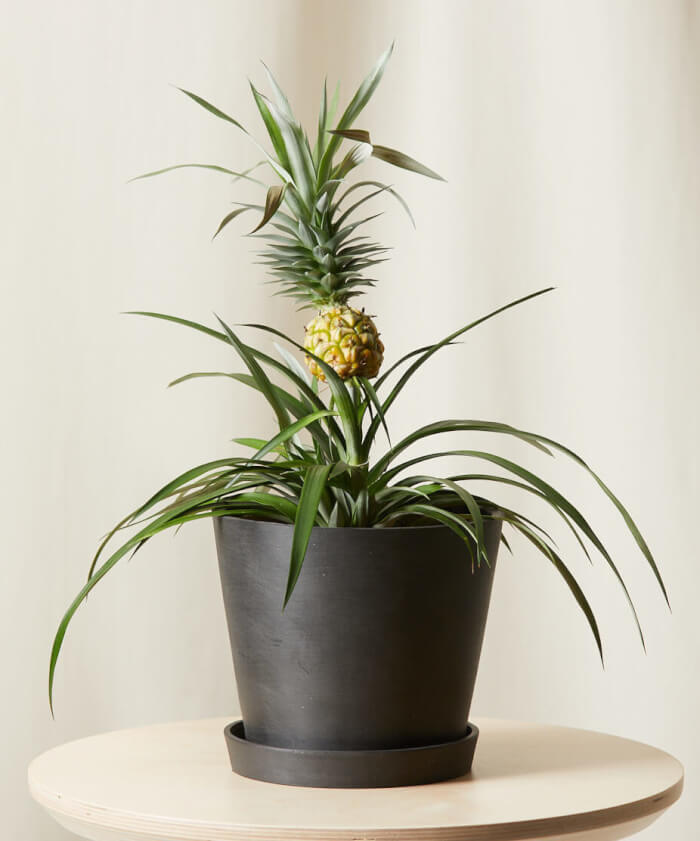
#1. Bromeliad Pineapple
 Source: Bloomscape
Scientific name: Ananas Comosus
Water: Once a week. Feel free to modify it to keep the soil hydrated
Light: In bright and direct sunlight
Temperature: 65°F+
Features: In addition to being a gorgeous element for your home’s decor, the bromeliad pineapple also generates oxygen at night. In addition to its distinctive aroma, bromelain is an anti-inflammatory enzyme that relieves sinusitis and snoring.
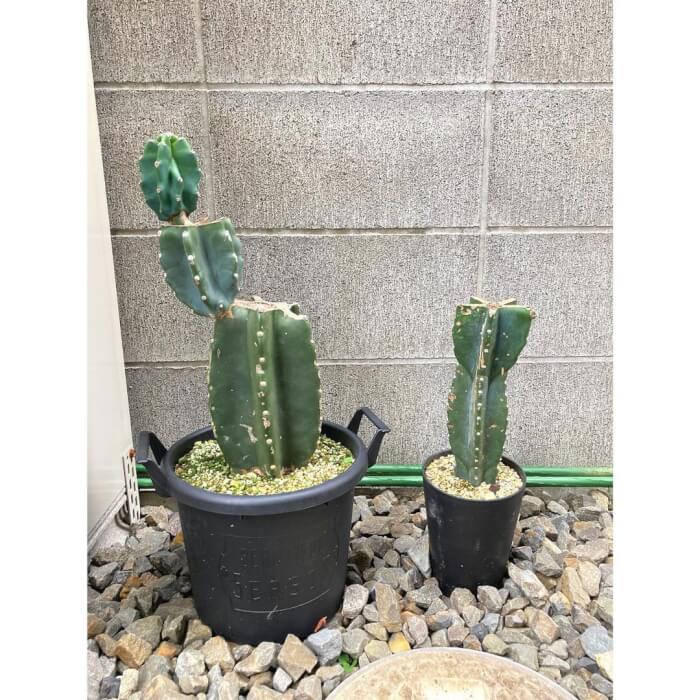
#2. Peruvian Apple Cactus
 Source: kwkmkn423
Scientific name: Cereus Repandus
Water: Every 2-3 weeks.
Light: In bright and indirect sunlight
Temperature: Between 60°F and 75°F
Features: This cactus can grow up to 4″-8″ in diameter. It blooms from late spring to early fall, and its nocturnal, fragrant, 2″ to 3″ spectacular flowers range in color. The blooms only bloom for one night.
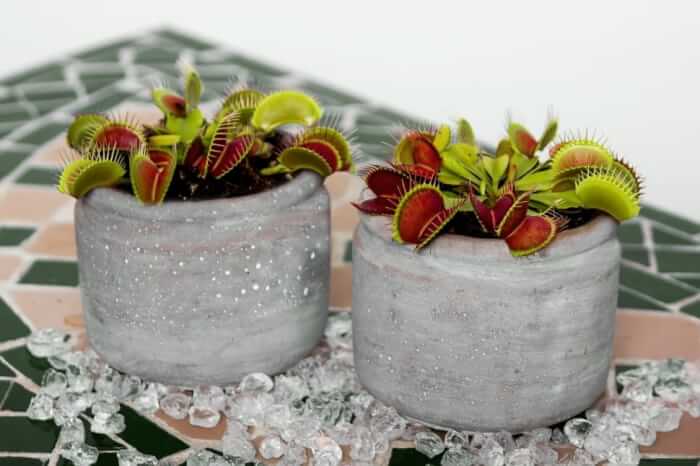
#3. Venus Flytrap
 Source: Carnivorous Plants Hub
Scientific name: Dionaea Muscipula
Water: Every 2 or 3 days
Light: Full sunlight
Temperature: 55°F+
Features: Because they are carnivorous plants, Venus Flytraps get their nutrition from insects rather than from soil or fertilizer. They have developed traps with hair-like features that can close and squeeze their prey.
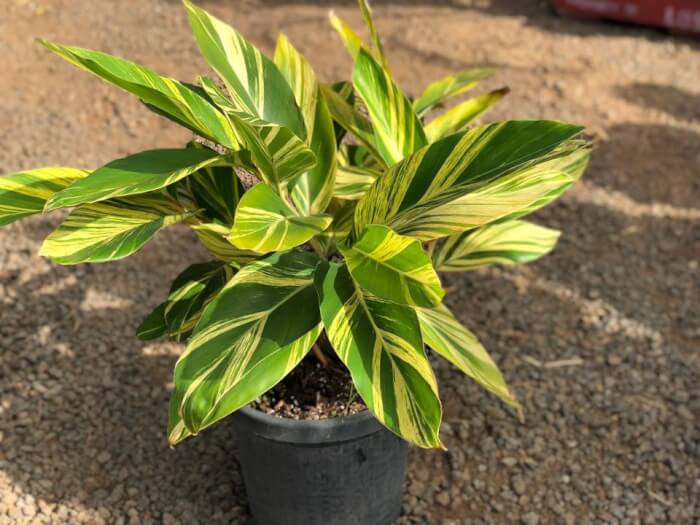
#4. Variegated Shell Ginger
 Source: True Green Nursery
Scientific name: Alpinia Zerumbet
Water: Keep the soil well drained but evenly moist.
Light: Prefers a well-lit area without direct sunlight
Temperature: 68°F+
Features: It is well known for its lovely blooms and leaves. The low-maintenance variegated ginger has erect clusters of succulent, thick rhizomes that resemble the culinary variety.
This impressive specimen grows quickly and reaches a height of 3 to 4 feet when cultivated in northern regions as an annual container plant.
#5. Chamomile
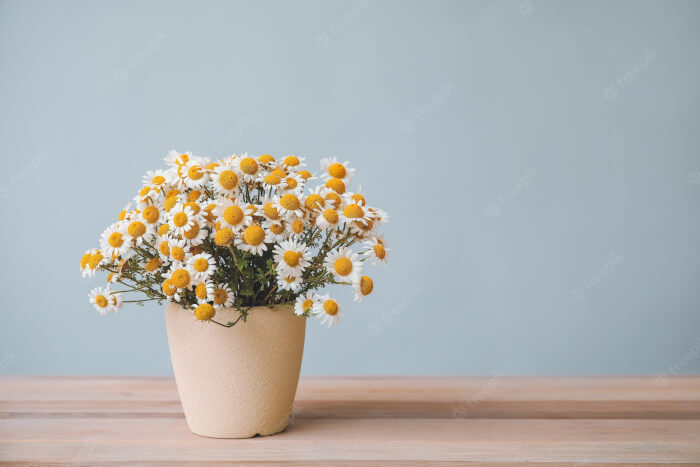 Source: Freepik
Scientific name: Matricaria Recutita or Chamaemelum Nobile
Water: Young chamomile plants require approximately an inch of water each week. The plants are drought resistant as they mature and become established.
Light: Full sun or partial shade
Temperature: Between 60°F+ and 68°F+
Features: You’ll adore the practicality of locally produced chamomile if you want to unwind at the end of the day with a calming cup of chamomile tea. The advantages of chamomile, however, extend far beyond tea. Chamomile is a fantastic companion plant, attracting helpful pollinators to your garden while also adding beauty and aroma.
#6. Variegated String Of Hearts
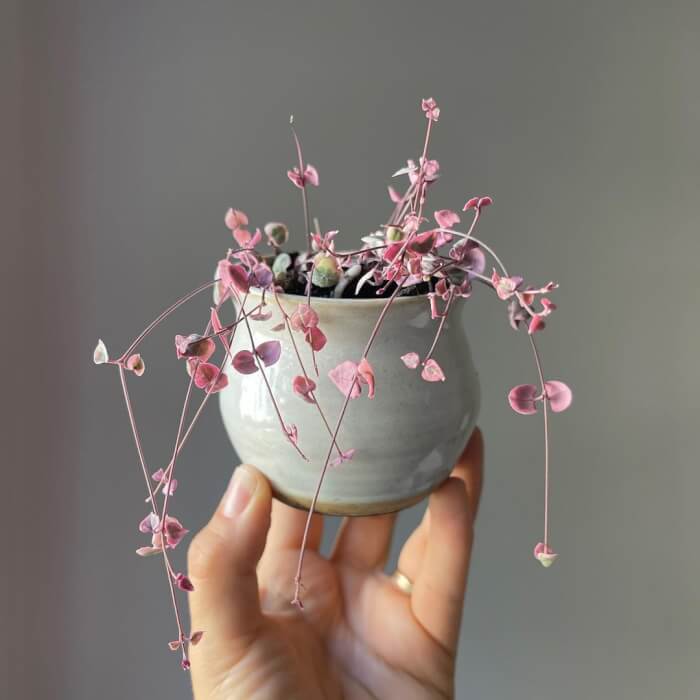 Source: alltheplantbabies
Scientific name: Ceropegia Woodii
Water: Prefer periods of drought between waterings.
Light: Bright, indirect sunlight
Temperature: Between 65°F+ and 90°F+
Features: It is a special plant for creative gardeners who want their plants to have more than just the traditional shade of green. Not only is this plant variegated, but it has pink variegation as well! Tiny heart-shaped leaves in shades of pink, white, and green cover this low-maintenance vine. Succulent leaves have pink leaf borders and a greenish-white core.
#7. White Wave
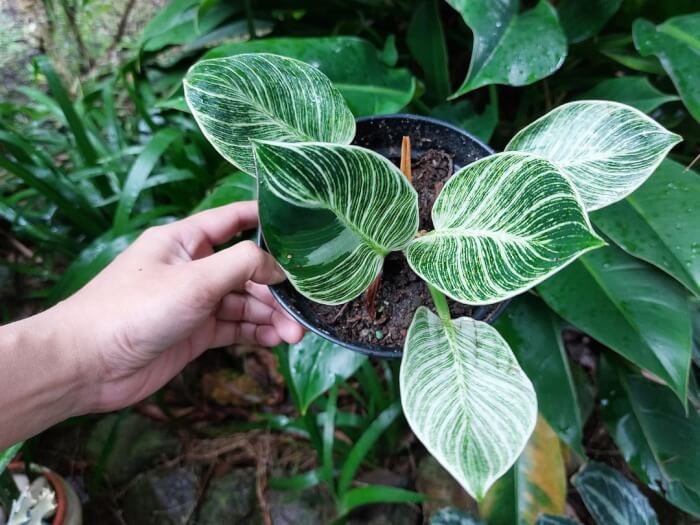 Source: easyplantme
Scientific name: Philodendron Birkin
Water: Water little and often, keeping the soil moist at all times. It tolerates some degree of drought better than being too wet.
Light: It is okay to grow it in a shaded area, but best in bright, indirect light.
Temperature: Between 64°F+ and 82°F+
Features: There are hundreds of kinds of stunning leaf plants in the genus Philodendron. Philodendrons are excellent for bringing a little of their natural tropical flare to your house because of their normally huge, glossy, green foliage. These houseplants are renowned for being simple to cultivate. They are also great for cleaning the air in your house. Although they grow best when planted in the spring, houseplants may normally be planted at any time of the year.
#8. Peacock Plant (Calathea)
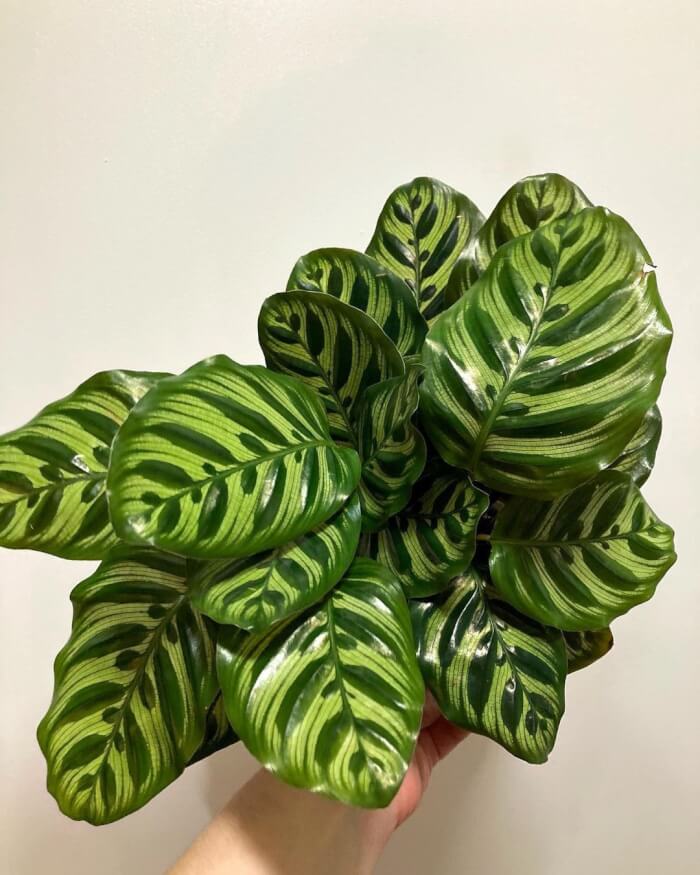 Source: vinesbtwnlines
Scientific name: Calathea Makoyana
Water: Peacock plants prefer medium levels of wetness, but not standing water or drenched ground.
Light: Medium to bright indirect light is perfect for Peacock Plants
Temperature: Between 65°F and 75°F.
Features: The Peacock plant, also known as Calathea Makoyana, is a stunning tropical houseplant that can liven up any interior area. It is renowned for its stunning, contrasting green and purplish-red foliage.
#9. Bromeliads
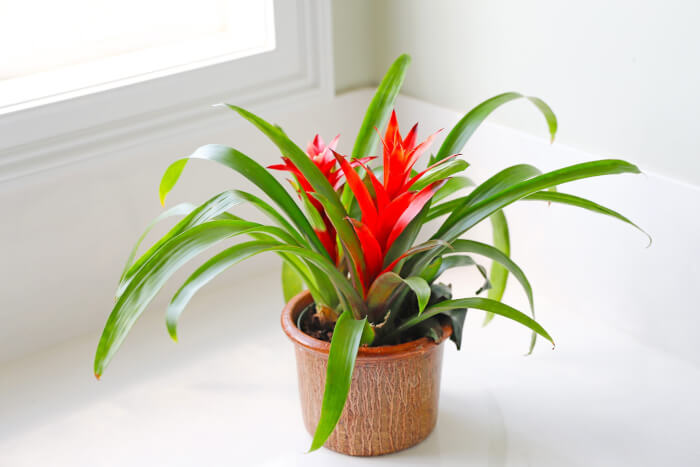 Source: Gardeners World
Scientific name: Bromeliaceae
Water: Water it well, but don’t let the water stand for an extended period of time because it might cause the plant damage.
Light: From full sun to partial shade, bromeliads can thrive in many kinds of lighting.
Temperature: Between 60°F and 85°F.
Features: They have multicolored leaves in red, green, purple, orange, and yellow, some with bands, stripes, spots, and other characteristics. Many varieties of bromeliads are renowned for their stunning foliage. Bromeliads are rather slow-growing plants that can grow up to 18 inches tall before flowering, maturing into flowering plants in one to three years.
#10. Gotu Kola
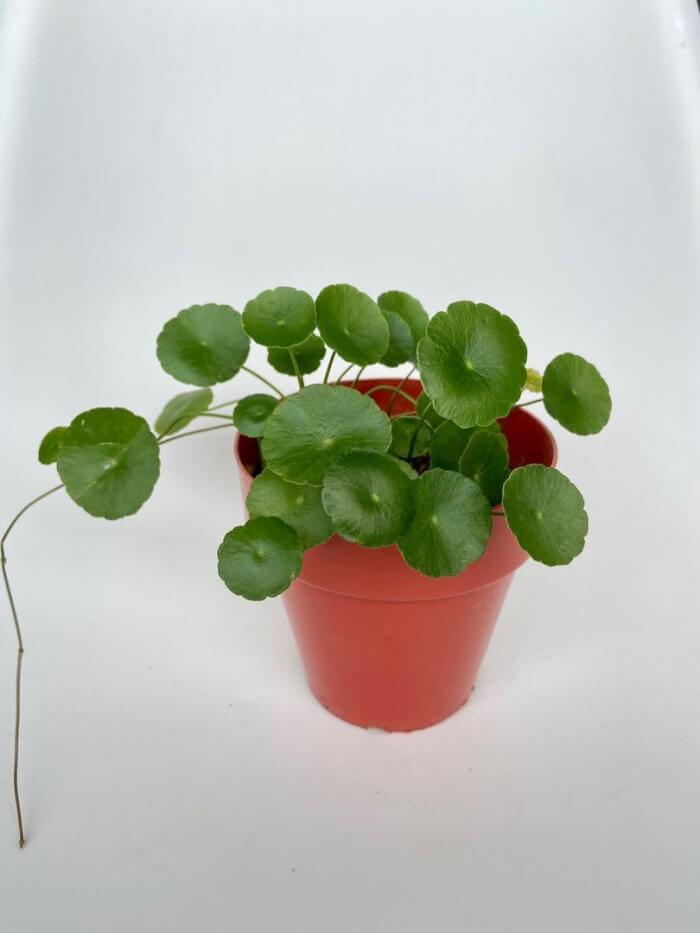 Source: Carousell
Scientific name: Centella Asiatica
Water: The Gotu Kola plant has to be watered often. It prefers frequent watering, humid air, and quick drainage.
Light: Part shade
Temperature: Between 10°F and 20°F.
Features: A perennial plant called Gotu Kola is indigenous to South Africa, Sri Lanka, India, Japan, China, Indonesia, and the South Pacific. It has neither a flavor nor a scent and belongs to the parsley family. It thrives in and around water.
It features tiny green leaves in the form of a fan, white or light purple to pink blooms, and tiny, oval fruit. The Gotu Kola plant’s leaves and stems are used in medicine.
#11. Spider Plant
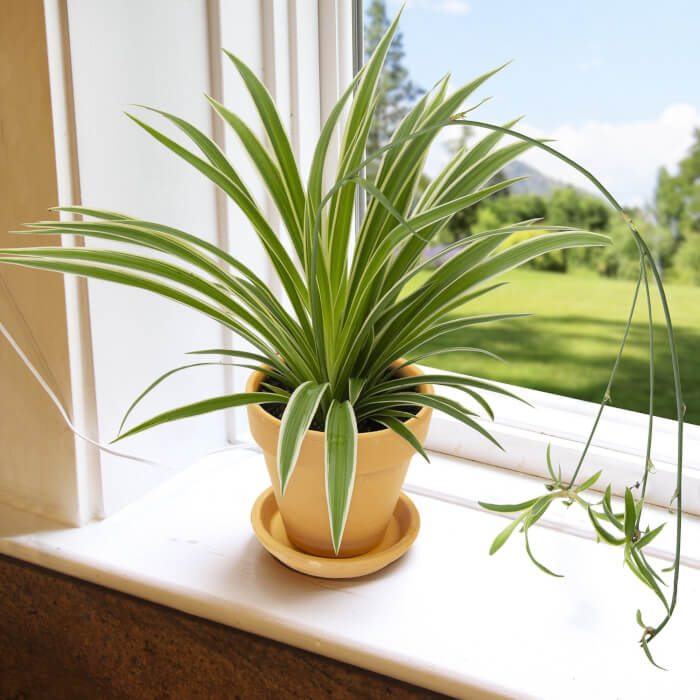 Source: Nắng Ngiêng Garden
Scientific name: Chlorophytum comosum
Water: Bright to moderate indirect sunlight
Light: Spider plants do not appreciate direct, hot sunlight
Temperature: Between 55°F and 80°F
Features: Since the plant is tolerant, simple to grow, and able to flourish in almost any environment, it is especially well-liked by beginners.
Its common name refers to the tiny plantlets that grow on long, trailing stems and have a little spidery appearance. The plant gets 12–15′′ tall. It can withstand sporadic watering because of the rhizomes and thick, meaty roots’ ability to store water.
#12. Rubber Plant
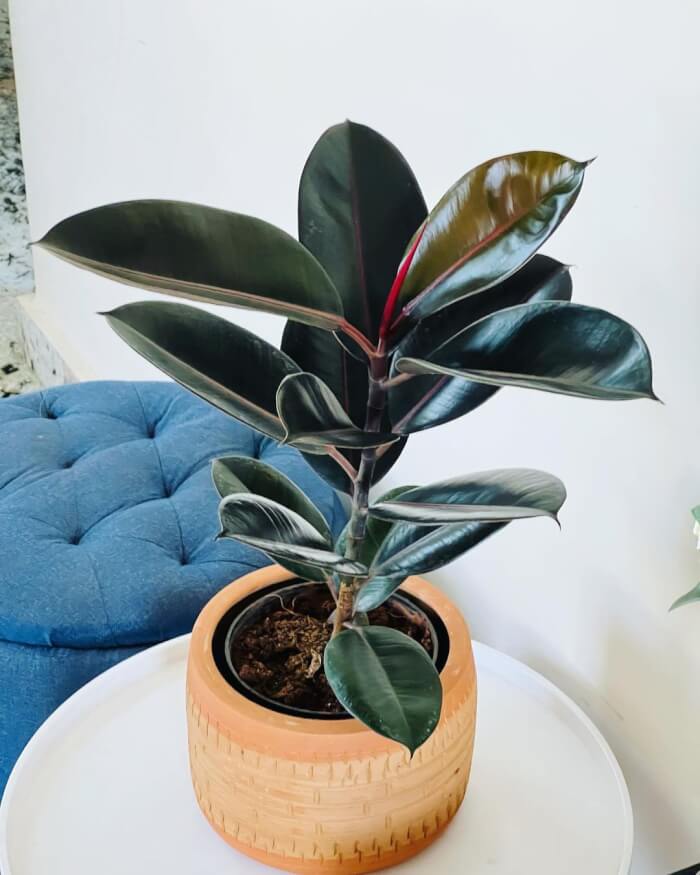 Source: the_pro_cam
Scientific name: Ficus elastica
Water: Every 1-2 weeks
Light: Medium to bright light, preferably bright indirect
Temperature: Between 65°F and 85°F
Features: Large, leathery, glossy leaves are the main reason that rubber plants are popular. The leaves are 8 to 12 inches long, oblong to oval, and come in a variety of hues, including dark green, deep maroon, and leaves with yellow, cream, pink, or white markings. It has attractive green, cream, and pink splotched leaves.
#13. Elephant Ear Plant
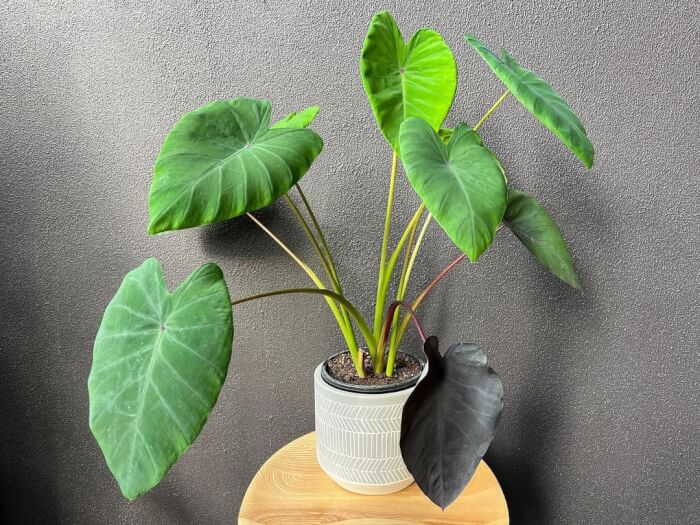 Source: hemanlikesplants
Scientific name: Colocasia
Water: Elephant ears like to stay consistently moist but not soggy.
Light: Grow in sun or shade
Temperature: Between 70°F and 85°F
Features: Tropical perennial plants called elephant ear plants are cultivated more for their attractively big leaves than for their blooms.
Regardless of the species, elephant ears are striking, exotic plants with enormous heart-shaped leaves that are often used as accent plants or as a focal point in gardens with a tropical theme.
#14. English Ivy
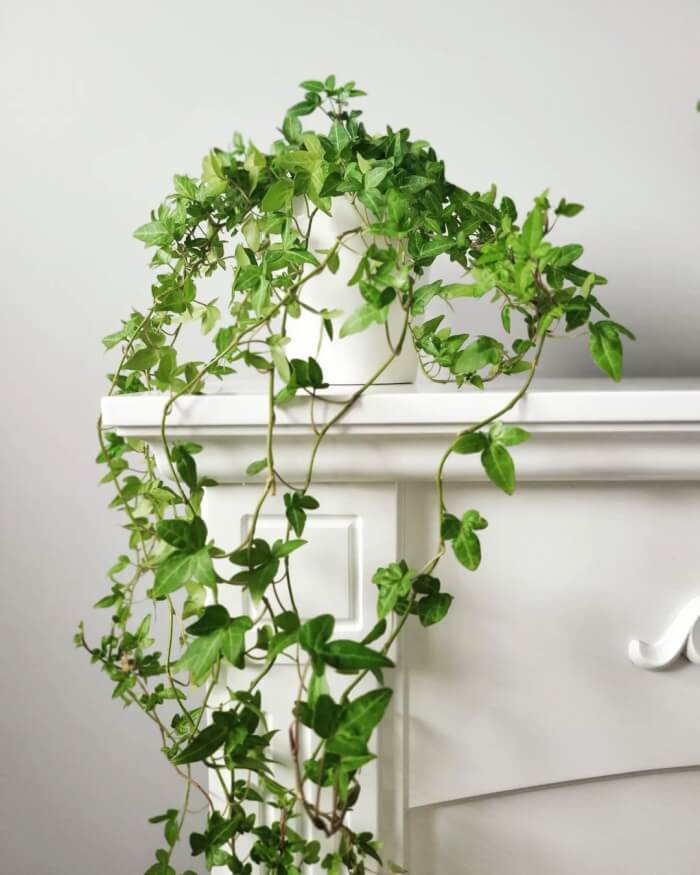 Source: health_wellness_with_jules
Scientific name: Hedera Helix
Water: Water it when the top of the soil dries out. Ivy likes moist but not wet soil.
Light: Medium light is best, but will also do well in bright light.
Temperature: Between 65°F and 85°F
Features: It is a perennial evergreen. It is further categorized as a woody vine. English ivy may cover the ground by horizontally spreading.
Although the plant will ultimately produce small greenish blooms, its evergreen leaves are the main reason it is planted. Ivy falls within the category of a foliage plant.
#15. Basil
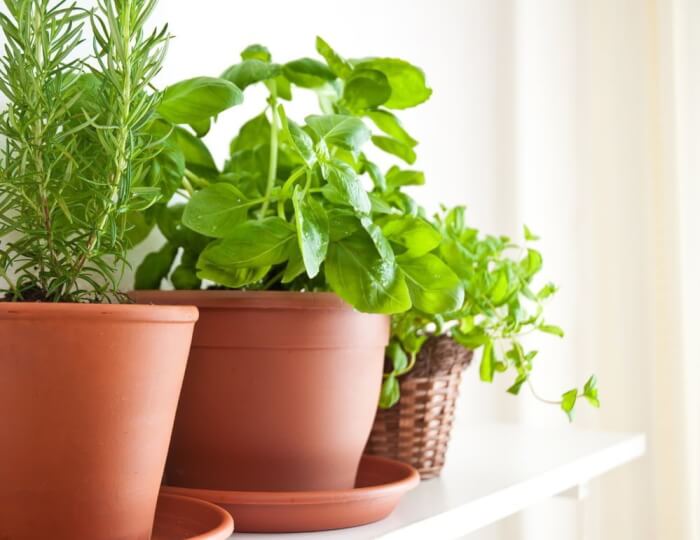 Source: Millcreek Gardens
Scientific name: Ocimum Basilicum
Water: Water it deeply regularly, especially if it’s growing in containers. However, be sure its soil is well-drained.
Light: Get at least 6 to 8 hours of full sun every day
Temperature: Between 50°F and 80°F
Features: Herbs provide your garden with beauty and scent as well as a ton of taste in your cooking. The majority of herbs are simple to cultivate and, after being planted, only need watering and harvesting.
They’re good for your health, so you can enjoy eating them as salad right after you collect them.
#16. Fiddle Leaf Fig
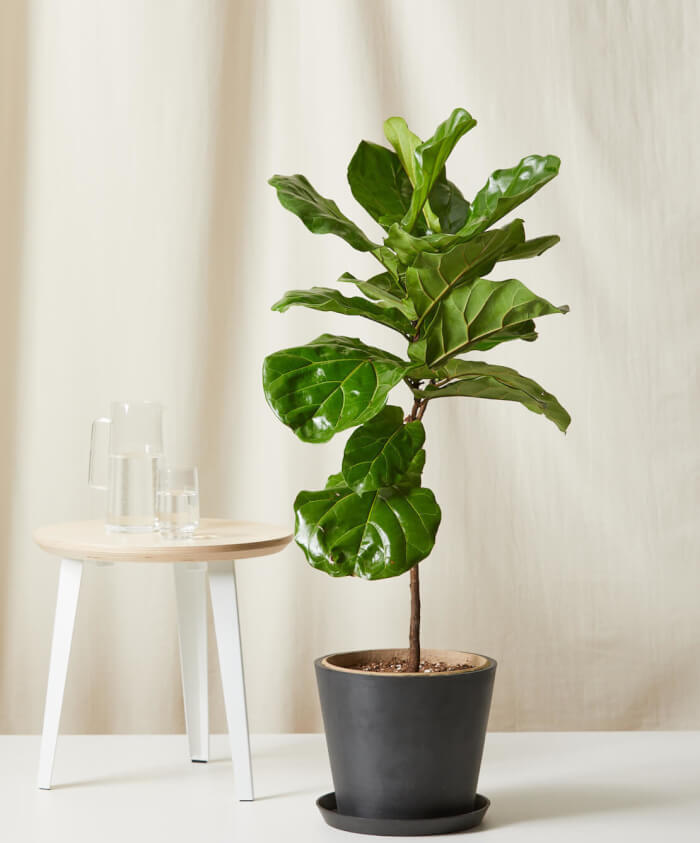 Source: Bloomscape
Scientific name: Ficus Lyrata
Water: Most Ficus like regularly moist soil, but not soggy soil.
Light: Consistently bright or filtered light is best, but avoid the prolonged direct sun
Temperature: Between 60°F and 80°F
Features: The fiddle-leaf fig is the ideal interior specimen plant. The plant has erect, violin-shaped leaves that are enormous, densely veined, and tall.
#17. Boston Ferns
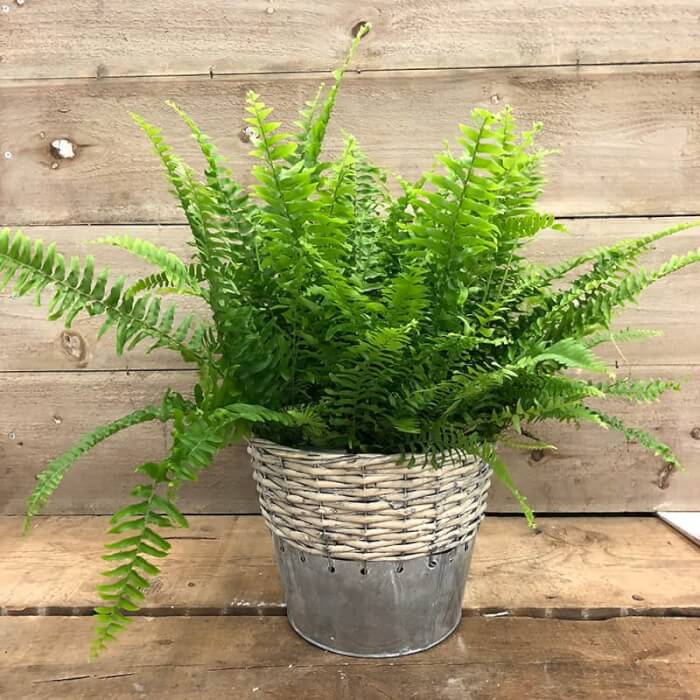 Source: Trees.com
Scientific name: Nephrolepis Exaltata
Water: Weekly watering sessions, keeping their soil moist but not wet.
Light: Medium and bright, indirect sunlight.
Temperature: Between 65°F and 95°F
Features: This fern looks great on hanging planters because of its long, sword-shaped green fronds, which become gently arched as they age. If let dry out, the foliage’s countless tiny leaflets fall off and are replaced by wiry stalks.
#18. Dracaena Gold Star
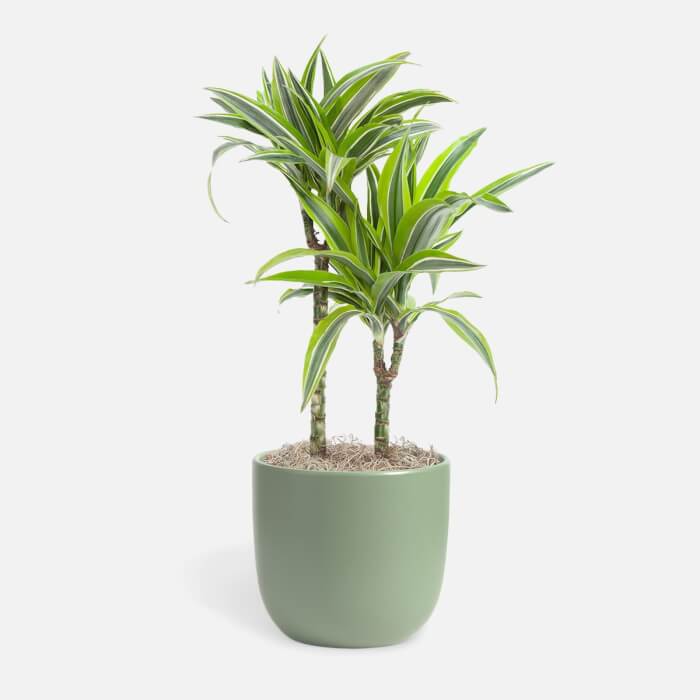 Source: Plantshed
Scientific name: Dracaena Fragrans
Water: Water when the top 75% of the soil is dry.
Light: Bright indirect light, but can survive in low light.
Temperature: Between 65°F and 80°F
Features: The year-round color of the appealing glossy sword-shaped leaves of the Goldstar Dracaena, which have an upright spreading style of growth, is a bluish-green with distinguishing lime green margins and white tinges. The plant is made more interesting by its dark green stems, which may be extremely appealing.
#19. Golden Bamboo
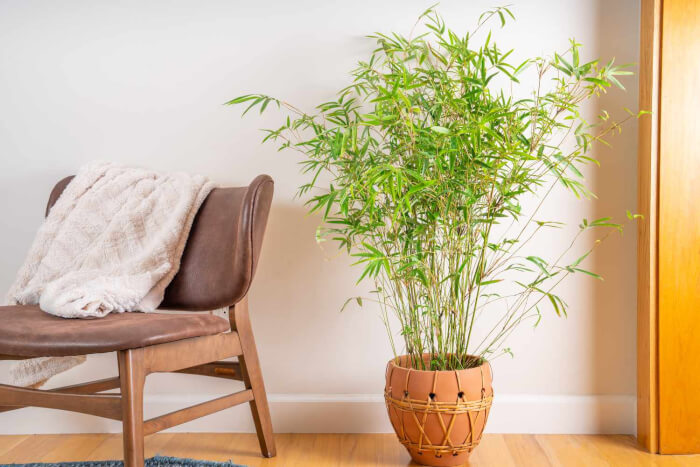 Source: The Spruce
Scientific name: Phyllostachys Aurea
Water: Water when the top 75% of the soil is dry. Golden bamboo does best with consistently moist conditions.
Light: Ample sunshine. Although the bamboo will withstand some shade, a shortage of light might slow the plant’s development.
Temperature: Between 60°F and 80°F
Features: Golden bamboo, which can grow up to 30 to 40 feet tall and tower over the majority of other grasses, forms a thick bamboo forest.
The stems are hollow, jointed, and made of wood. When young, they are green, but as they get older and are exposed to sunshine, they turn golden-yellow.
#2o. Chinese Money Plant
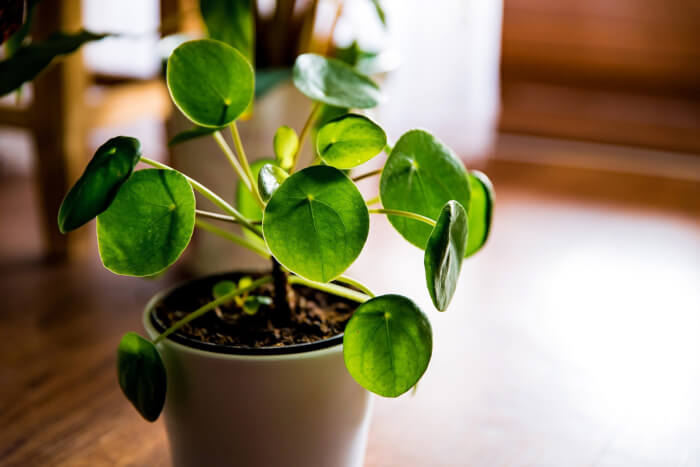 Source: Gardeners World
Scientific name: Pilea Peperomioides
Water: It enjoys weekly watering sessions
Light: Medium to bright indirect light with southern exposure.
Temperature: Between 60°F and 85°F
Features: The flat, rounded leaves are an indication of the Chinese money plant. Pancake plants are characterized by their shiny, leathery, thick, dark green leaves that balance on long, thin, red stalks.
They might not be edible, but they are unquestionably pleasing to the eye.
#21. Ficus Ginseng Bonsai Tree
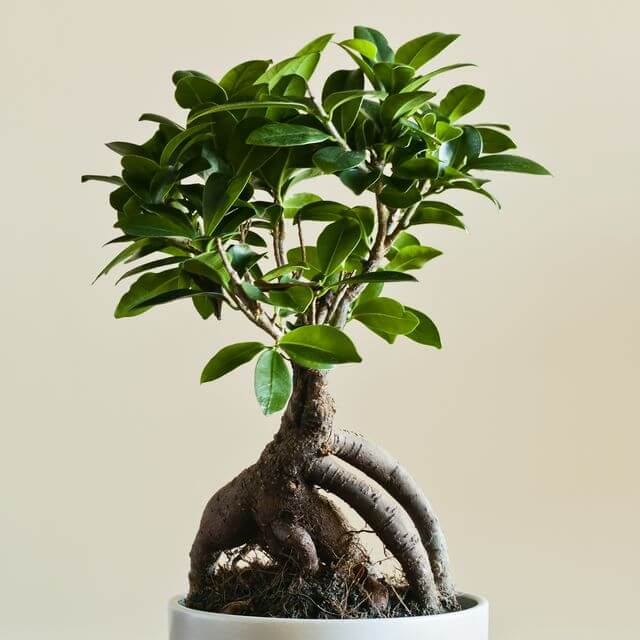 Source: House Beautiful
Scientific name: Ficus Retusa
Water: Water it thoroughly whenever the soil gets slightly dry.
Light: Indirect light, avoid a spot with direct, bright light
Temperature: Around 70°F
Features: It has dark green, oval-shaped leaves. The Ginseng Ficus has a large, bulbous trunk that is reddish gray and striped like a tiger. The fact that ginseng ficus is a low-maintenance bonsai tree is its finest feature.
#22. Weeping Fig Tree Plant
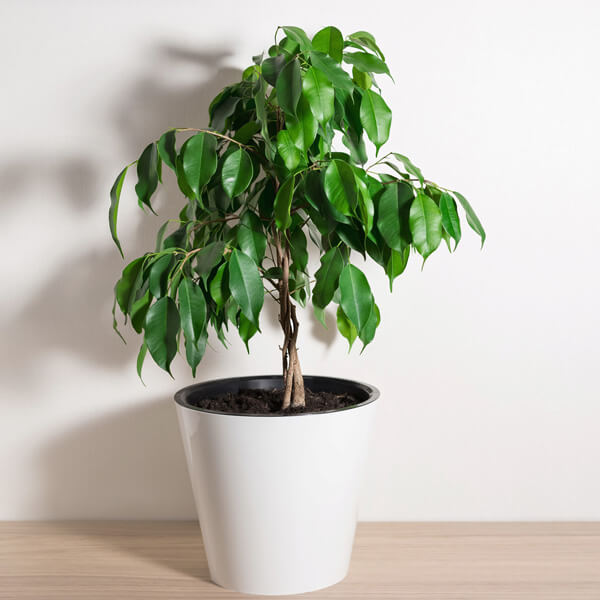 Source: Garden Express
Scientific name: Ficus Benjamina
Water: When the top several inches of the soil is dry.
Light: It needs a bright room with plenty of indirect sunlight, and perhaps even a little direct sun in the morning
Temperature: Between 65°F and 85°F
Features: Weeping figs are cultivated because of their lovely appearance and leaves. They feature glossy, round, green leaves and smooth, gray-green bark.
There are cultivars with wavy leaves, variegated foliage, and pendulous branches. Weeping fig stems are frequently trained into decorative forms.
#23. Guiana Chestnut
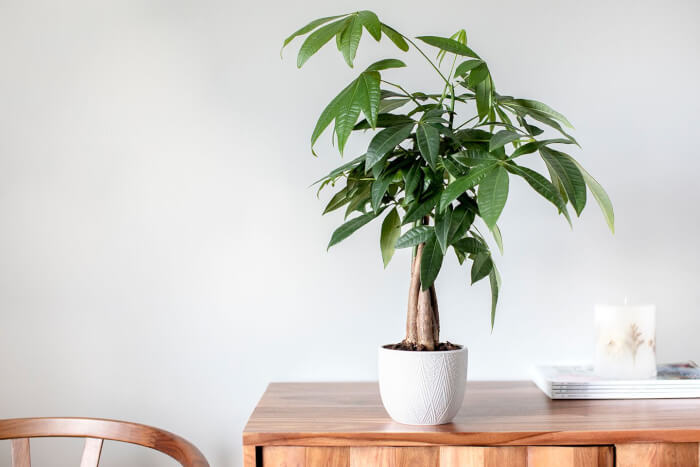 Source: The Spruce
Scientific name: Pachira Aquatica
Water: 1 to 2 times a week
Light: A lot of strong, indirect light, such as from a window towards the south or west, but be careful to keep it away from the sun’s direct rays.
Temperature: Between 65°F and 85°F
Features: An evergreen tree with large leaves, the Pachira has hand-shaped compound leaves with up to 9 leaflets per leaf. The trees may reach a height of 20 meters (65 feet) in their native environment.
The bark of money trees ranges from brown to grey, and they frequently have a slightly enlarged base of the trunk that also acts as water storage.
#24. Jade Plants (Crassula Succulents)
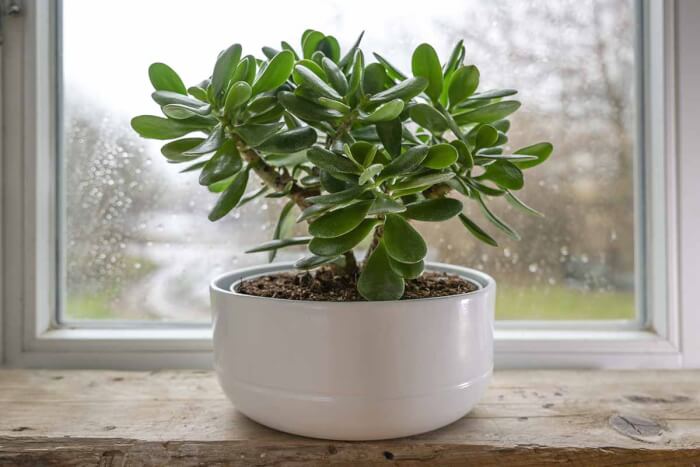 Source: Gardener’s Path
Scientific name: Crassula Ovata
Water: Once every 2 to 3 weeks
Light: Jade plants should receive at least 6 hours of bright light each day.
Temperature: Between 65°F and 75°F
Features: The jade plant is a branching, succulent shrub that is often kept indoors. It has thick, woody branches and two-inch-long, fleshy, glossy-green oblong leaves.
This long-lasting, low-maintenance plant eventually resembles a tiny tree as it ages. It’s easy to grow as well.
As an Amazon Associate I earn from qualifying purchases. Amazon and the Amazon logo are trademarks of Amazon.com, Inc, or its affiliates.