

10 Stunning Houseplants With Brilliant Red Flowers
Red flowers have a way of stealing the spotlight in any room. They bring warmth, energy, and charm while making your home feel lively and welcoming.
Adding a red-flowering plant instantly creates a bold accent that works beautifully with modern or classic interiors.
These plants range from delicate clusters to large, dramatic flowers that last for weeks. Each one offers its own personality and care needs, so you can choose what fits your space best.
With a little attention, you’ll have a living display of color that keeps drawing eyes and sparking joy.
#1 Chenille Plant
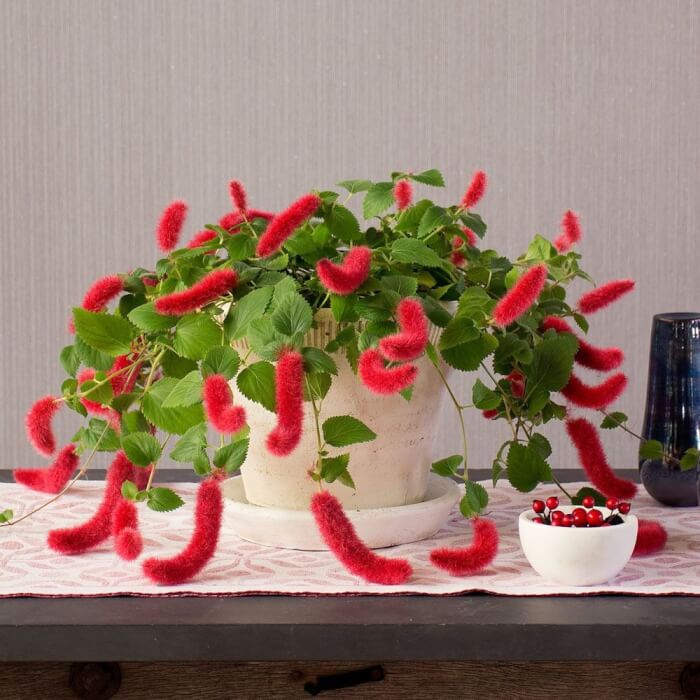
Chenille Plant is known for its fuzzy, bright red blooms that resemble soft caterpillars. It grows quickly and loves a sunny spot indoors.
Keep the soil moist but not soggy, and trim the stems to shape it into a neat, bushy form. A hanging basket will show off its trailing blooms beautifully.
#2 Flamingo Lily
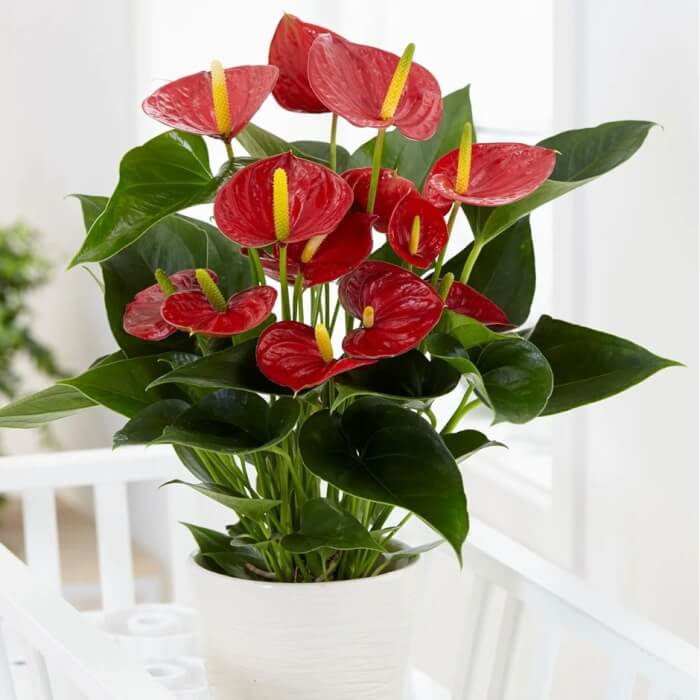
Flamingo Lily produces glossy, heart-shaped flowers that last for weeks and look amazing in vases. The red variety is striking, though you’ll also find it in pink or white.
It prefers bright, indirect light and slightly moist soil. Wipe the leaves occasionally to keep them glossy and dust-free.
#3 Flame of the Woods
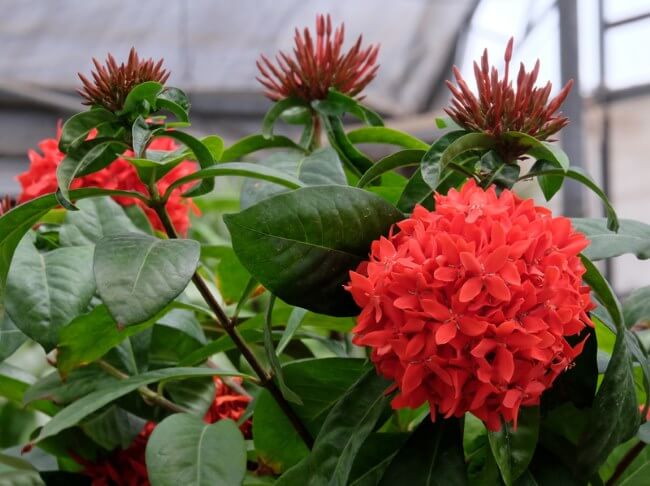
Flame of the Woods, also called Ixora, produces clusters of star-shaped red blooms against dark green foliage. It thrives in sunny windows and rewards you with flowers almost year-round.
Water regularly, but let the top layer of soil dry slightly before the next watering. Pinching back tips helps the plant stay compact and fuller.
#4 Hibiscus
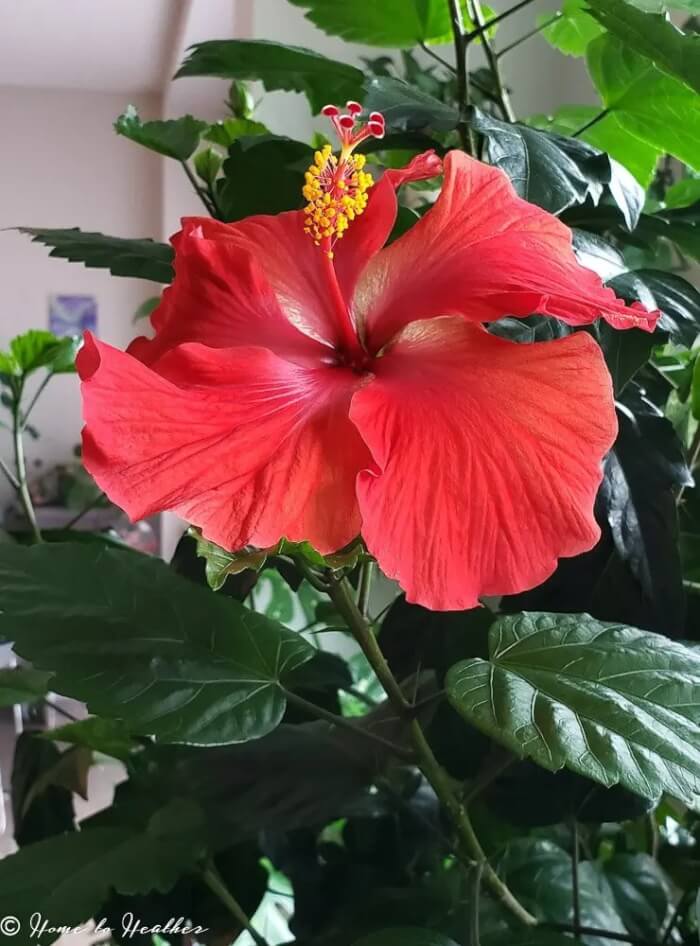
Hibiscus is a tropical favorite that rewards you with large, showy red blossoms. Indoors, it does best in a bright, warm location.
Keep the soil evenly moist and feed it during the growing season for continuous blooms. Prune lightly in spring to encourage fresh growth and more flowers.
#5 Cacti
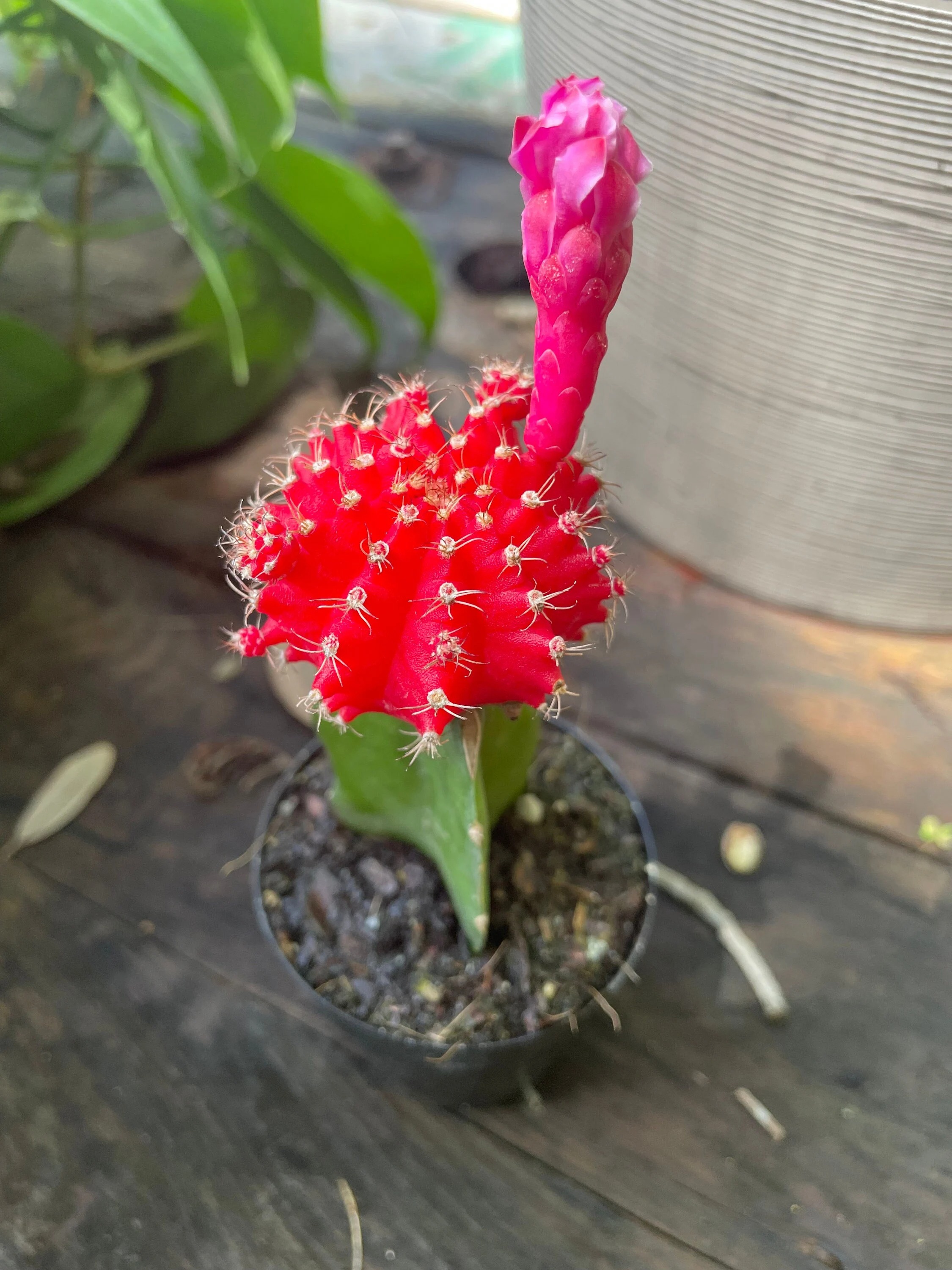
The Red Cactus, often grafted onto a green base, brings a striking pop of color to tabletops and shelves. It’s easy to care for, just like other cacti.
Place it in a sunny window and water sparingly, letting the soil dry completely between waterings. A small clay pot works best to prevent soggy roots.
#6 Lipstick Plant
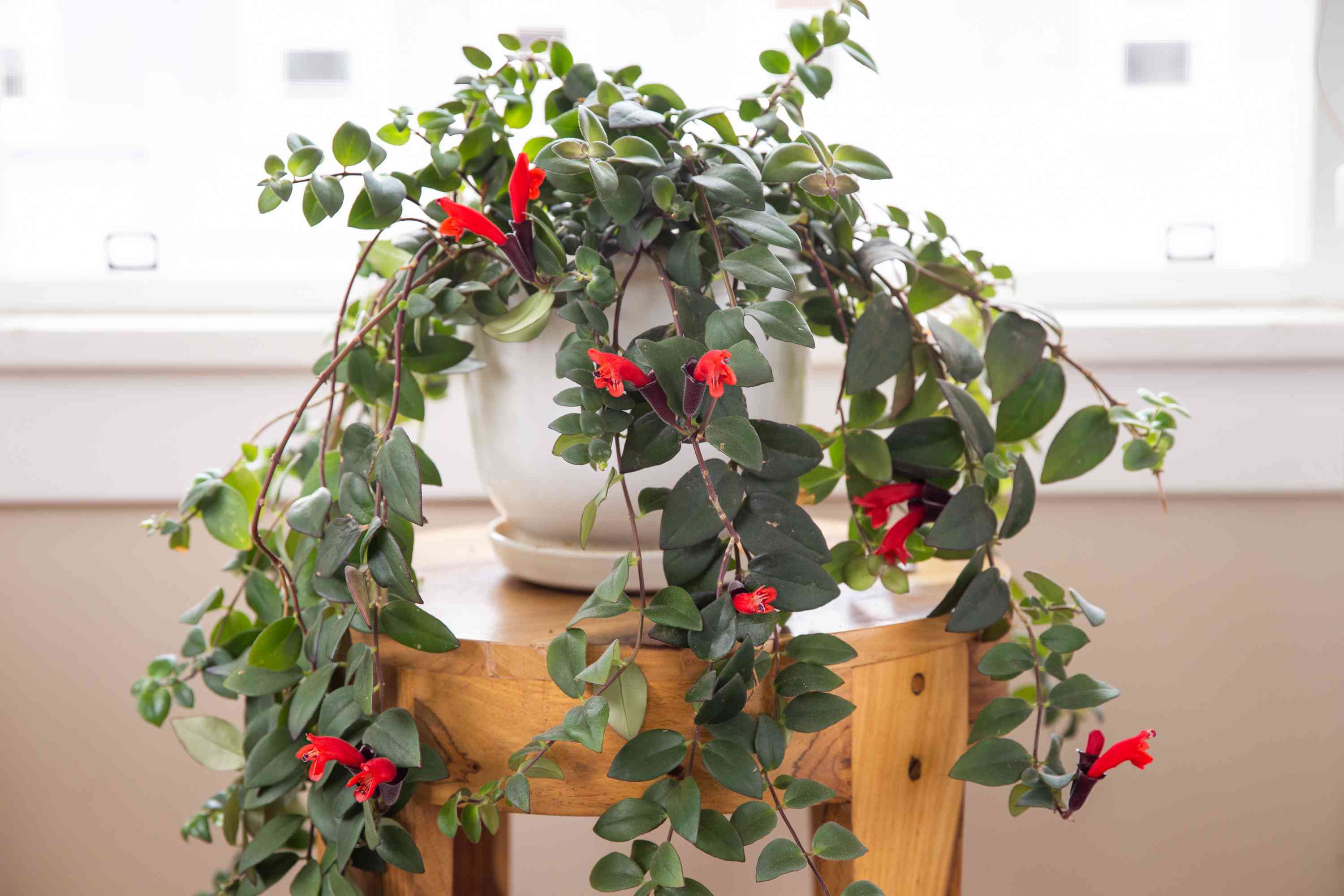
Lipstick Plant gets its playful name from its tubular red flowers that peek out like sticks of lipstick. It’s perfect for hanging baskets, where the trailing stems can show off blooms.
Provide bright light, moderate watering, and extra humidity to keep it happy. Light pruning after flowering encourages more branching.
#7 Kalanchoe
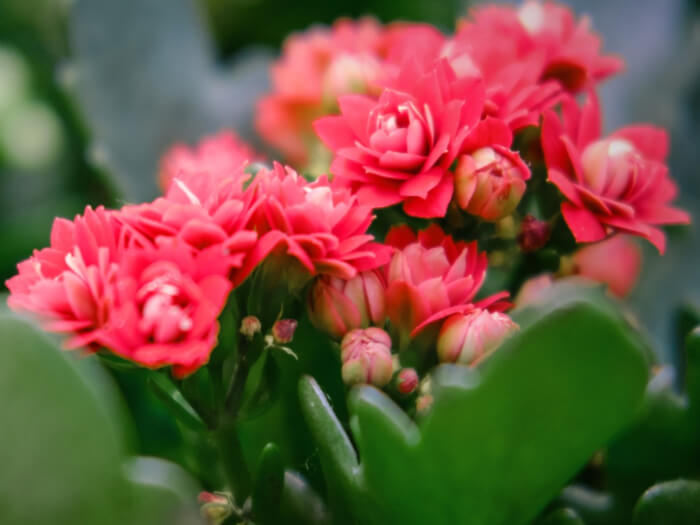
Kalanchoe is a compact succulent that produces clusters of cheerful red blooms lasting several weeks. To set more buds, it needs long nights with at least 14 hours of darkness.
Keep it in bright daylight during the day, and water only when the soil feels dry. A small dose of fertilizer while budding helps extend the flower show.
#8 Amaryllis
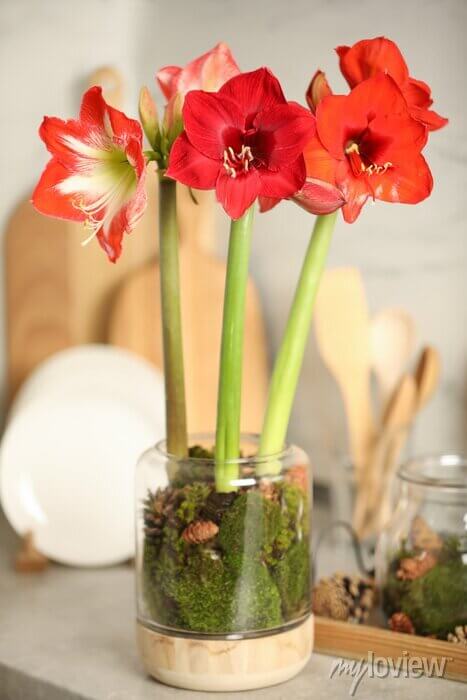
Amaryllis bursts into dramatic red flowers in the winter months when color is most needed. The tall stalks carry large, trumpet-shaped blooms that last for weeks.
Place the bulb in a sunny window and water lightly until growth begins, then increase watering as the flower stem rises. After blooming, cut back the stalk but allow the leaves to grow so the bulb can recharge.
#9 Shrimp Plant
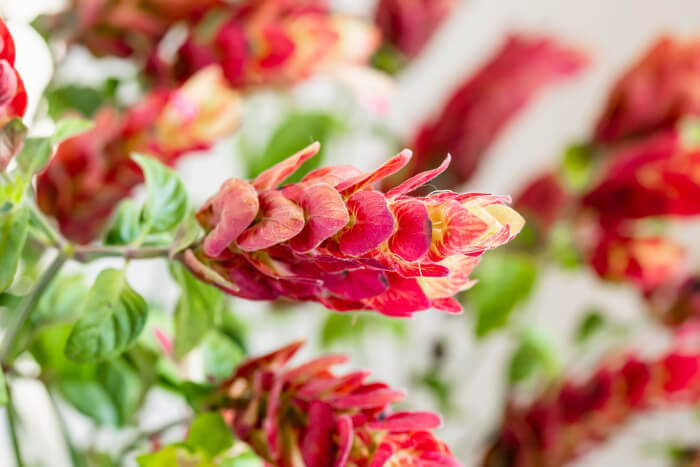
Shrimp Plant produces overlapping red bracts that look like tiny prawns. It flowers generously with the right care and bright light.
Keep the soil evenly moist and prune it back in early spring to encourage fresh, bushy growth. Within weeks, new blooms will appear to refresh its display.
#10 Bromeliads
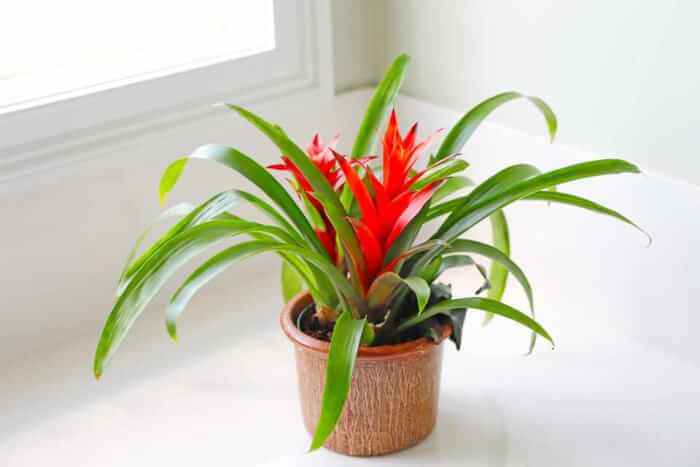
Bromeliads bring bold tropical flair with their long-lasting flower bracts in fiery shades of red. They adapt well to indoor conditions and don’t need much water.
Instead of soaking the soil, pour water into the central cup of the plant and keep it topped up. After flowering, the main plant fades but produces pups that can grow into new bromeliads.
As an Amazon Associate I earn from qualifying purchases. Amazon and the Amazon logo are trademarks of Amazon.com, Inc, or its affiliates.